
← Product buy block above
Soursop 101
Everything before
it hits your counter.
1–4
Days to Ripen
2-Day
Shipping
A1
Grade
GRD
Grenada Origin
Your fruit,
specified.
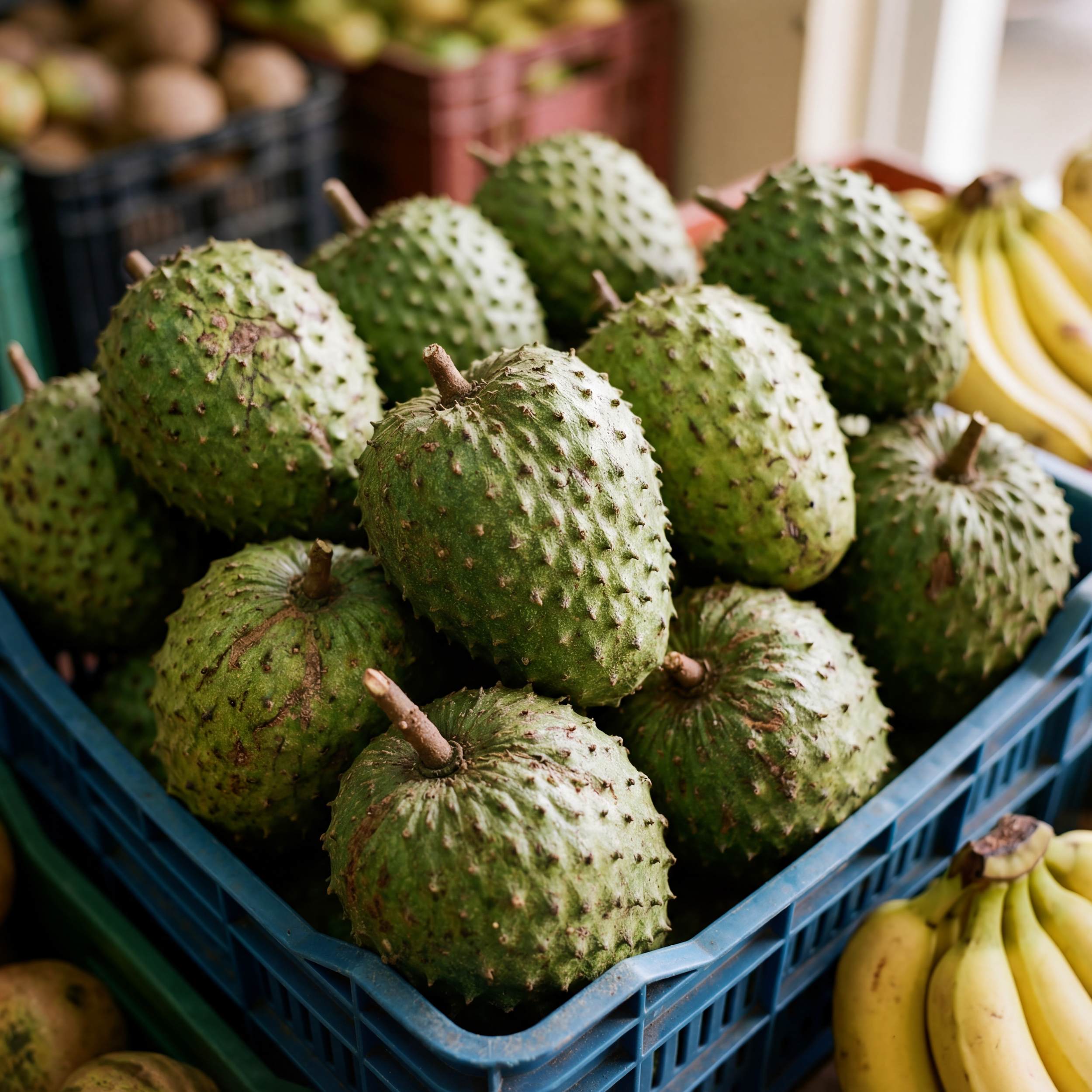
Real Caribbean soursop, hand-picked and shipped direct from our Grenadian farms to Little Caribbean Brooklyn.
Origin
Grenada, W.I.
West Indian variety · Farm direct
Ripeness
Ready in 1–4 days after arrival — ships firm so it finishes on your counter.
Texture
Soft, custard-like flesh with a gentle tropical tang.
Good For
Eating fresh, smoothies, juices, desserts, and wellness rituals.
Grade
A1 Fresh — USDA authorized. The only fresh soursop legally importable in America.
Ships From
Little Caribbean, Brooklyn, NY · Nationwide in 2 days.
Packed for
the journey.
Soursop is fragile. We've engineered the packaging to protect it through 2-day transit and land it at your door in perfect condition.
Transit
2-Day
Insulated · Hand-packed
- Packed by hand in protective wrap and insulated boxing designed for fragile tropical fruit.
- Ships slightly firm so it finishes ripening naturally on your counter — not in a warehouse.
- Ready to eat when the skin darkens and yields soft to gentle pressure. Usually 1–4 days.
- Whole fruit: keep on the counter, away from direct sun. Do not refrigerate before ripe.
- Once cut: remove seeds, store pulp airtight. Fridge up to 3 days, freezer up to 3 months.
Four steps.
One ritual.
Soursop rewards patience. Wait for full ripeness, then follow these four steps for the best experience.
Prep Time
5 min
From fruit to plate
-
Cut it openSlice lengthwise from stem to tip and open like an avocado. Flesh should look creamy white and smell floral.
-
Remove the seedsTake out the large black seeds as you go — they're not edible. Smaller white seeds near the skin can go too.
-
Spoon and eatScoop the flesh straight from the skin — or blend into smoothies, juices, or ice cream. The flavor sits between pineapple and strawberry with a creamy finish.
-
Try a ritualPair with Soursop leaves or our Jus Soursop for a full-body Caribbean wellness moment.
Not medical advice. Traditional uses are cultural and folk-based — always consult a professional for medical questions.