Hormones don't
just need balance.
They need the whole system addressed.
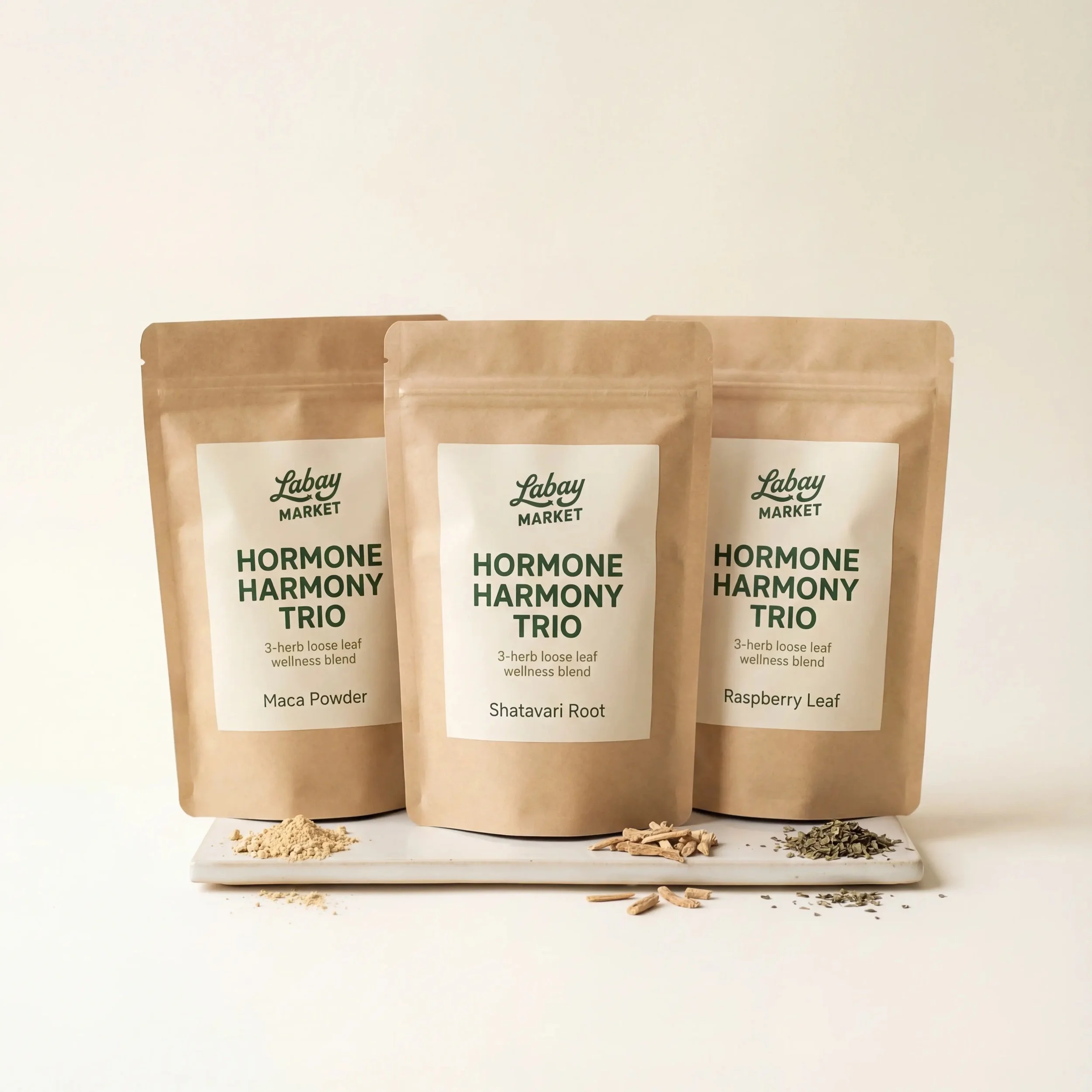
Hot flashes, mood swings, irregular cycles, painful periods, low libido, unexplained fatigue — these aren't separate problems. They're different expressions of the same cascade falling out of sync. That cascade starts in the brain with the hypothalamic-pituitary axis, moves through the bloodstream via estrogen and progesterone signaling, and lands in the uterine tissue itself. No single herb covers all three levels. This kit does.
Maca Powder
Lepidium meyenii · Peruvian Andes, 4,000m+The command-center regulator. Maca's most important distinction is what it doesn't do: it doesn't add hormones to your body. It doesn't mimic estrogen. Instead, it works on the hypothalamic-pituitary-ovarian (HPO) axis — the brain's own hormone-regulation system — and trains it to self-correct. This makes it uniquely valuable across life stages: perimenopause, menopause, cycle irregularity, stress-related hormonal disruption. Where phytoestrogens give the body what it's short on, maca teaches the body to produce it again.
A systematic review in Maturitas (2011) analyzed 4 RCTs in perimenopausal and postmenopausal women — all four showed favorable effects using the Kupperman Menopausal Index and Greene Climacteric Score. A double-blind, placebo-controlled, multi-centre trial of 168 postmenopausal women found that after 2 months of maca, participants had measurable increases in estradiol (E2) and bone density markers, plus reductions in FSH, LH, and cortisol — alongside significant relief of hot flashes and night sweats. Maca's active alkaloids, macamides, and glucosinolates act on both the HPO axis and HPA axis (the stress-hormone system), making it effective for stress-related hormonal disruption as well.
Shatavari Root
Asparagus racemosus · India & HimalayasThe receptor-level signal. Where maca works upstream at the brain, shatavari works downstream at the target tissue — its steroidal saponins (called Shatavarins) bind directly to estrogen receptors and mimic progesterone, filling in what the body isn't producing enough of. Known in Ayurveda for over 3,000 years as the "Queen of Herbs," and literally meaning "woman with a hundred husbands" — its name speaks to its historical reputation as the primary female vitality herb. Modern science is now catching up to why.
A 2025 multicenter RCT (Frontiers in Reproductive Health) of 135 women (ages 45–65) found shatavari root extract produced significant improvements in hot flash frequency, mood, perceived stress, and menopausal quality of life over 8 weeks vs. placebo. A separate 2025 perimenopausal RCT (n=80) showed statistically significant vasomotor symptom improvement, with dose-dependent modulation of FSH, LH, AMH, and E2. Research also confirms benefits for libido, lactation support, and endometrial health. Its active Shatavarins have demonstrated progesterone-enhancing and estrogen receptor-binding properties in multiple preclinical studies.
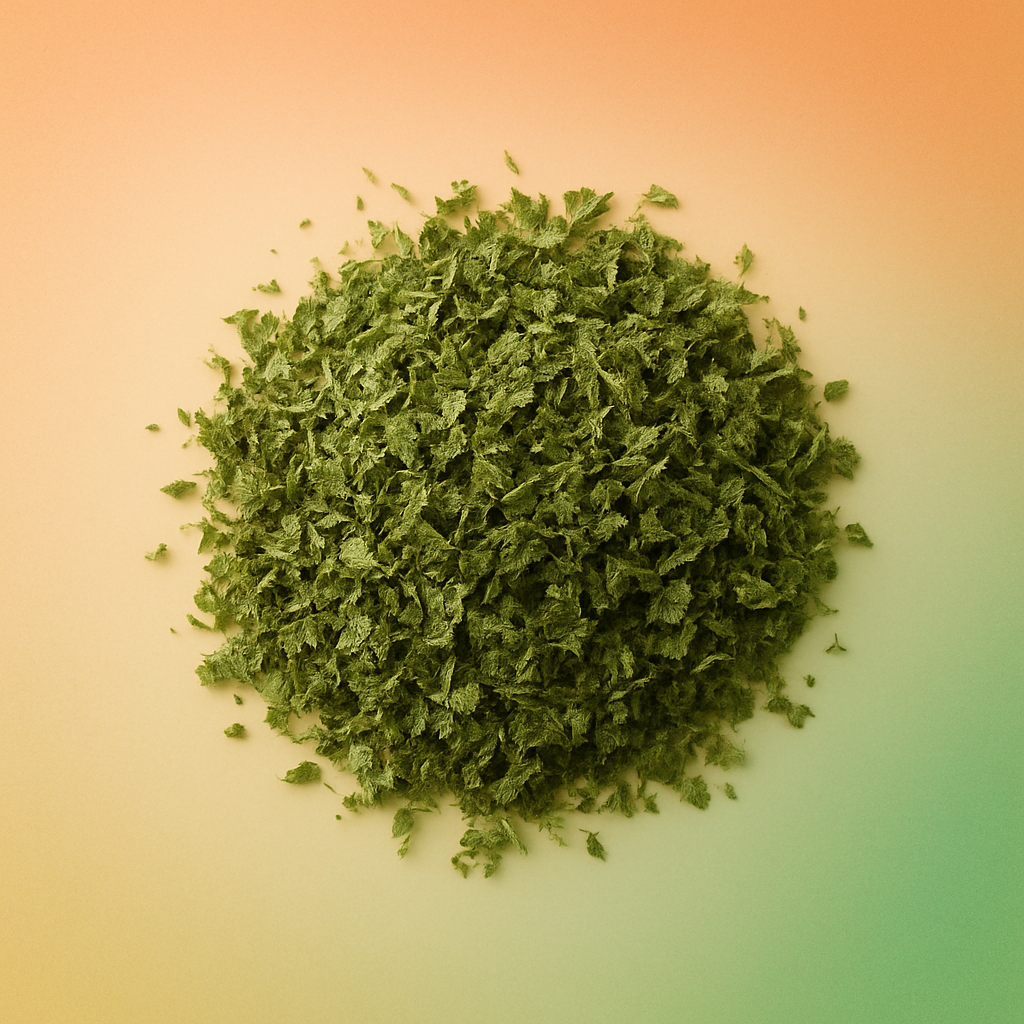
Raspberry Leaf
Rubus idaeus · Europe & North AmericaThe tissue layer. Raspberry leaf doesn't regulate hormones — it works directly on the uterus itself, through a unique alkaloid called fragarine that normalizes smooth muscle tone. Not stimulating, not sedating: toning. Contractions become more coordinated, cramping becomes less severe, bleeding more manageable. And unlike most herbs in this kit, raspberry leaf also physically replenishes what menstruation takes: iron, magnesium, calcium — the minerals that run out every month and leave you depleted.
A landmark RCT of 192 women (Journal of Midwifery & Women's Health, 2001) found raspberry leaf users had a shorter second stage of labor and a significantly lower forceps delivery rate (19.3% vs. 30.4%) — the clearest clinical evidence that fragarine's uterine-toning effect is real and measurable. A 2024 PMC animal study confirmed raspberry leaf polyphenol extract reduced endometriotic lesion size and modulated key inflammatory markers (MMP-2, MMP-9, TGF-β1). Research also documents anti-inflammatory activity via COX enzyme inhibition — the same pathway as NSAIDs, explaining its traditional use for dysmenorrhea. Safe for most adults; used continuously for 200+ years in European midwifery.
The axis.
The signal.
The tissue.
Hormone regulation isn't one event — it's a chain. The hypothalamus signals the pituitary. The pituitary signals the ovaries. The ovaries produce estrogen and progesterone. Those hormones travel to target tissues and bind to receptors. The tissues respond. When any link in that chain misfires, you feel it everywhere.
Maca addresses the chain at its source — recalibrating hypothalamic-pituitary signaling so the brain starts issuing better instructions. No hormone added; the body learns to regulate itself. Shatavari meets the signal at the receptor — its Shatavarins fill estrogen and progesterone receptor sites that are going unfilled due to declining production, compensating for what the ovaries aren't providing. Raspberry leaf works where it lands — directly in the uterine muscle, toning the tissue so its monthly work is organized, coordinated, and mineral-replenishing rather than depleting.
One kit. Three levels. The whole cascade covered.
- Cycles are irregular or unpredictable
- Cramping is moderate to severe
- Perimenopausal symptoms: hot flashes, night sweats
- Post-cycle fatigue and mineral depletion
- Mood changes tied to the menstrual cycle
- Low libido or reproductive vitality
- Stress-driven hormonal disruption
Work with your cycle, not around it.
Maca powder is a food, not a typical steep-and-strain tea. Add 1 tsp to warm (not boiling) water, milk, or a smoothie and blend or whisk well. Heat above 70°C degrades the active macamides — warm is better. The taste is earthy and slightly malty. Morning is ideal; it has mild energy-lifting properties that can interfere with sleep if taken late.
Combine both herb packets in 12–14 oz of just-boiled water and steep covered for 12–15 minutes. Shatavari has a mild, slightly sweet and bitter taste. Raspberry leaf brews clean and slightly astringent — similar to a light black tea. Together they're one of the more pleasant-tasting herbal brews in the kit series. Raw honey complements both well. Drink once daily, or twice in the week before and during your period.
Raspberry leaf: some period-related relief within 1–2 cycles of consistent use. Shatavari: vasomotor and mood improvements typically emerge within 4–8 weeks (per RCT timelines). Maca: HPO axis recalibration is gradual — 6–8 weeks minimum before assessing full effect. Start the kit at the beginning of a new cycle and commit for two full cycles before judging.
Heavy cycle weeks: lean on raspberry leaf — double the steeping time for a stronger iron and mineral infusion. Perimenopausal / no active cycle: use all three daily with no phasing needed. Luteal phase (week before your period): add shatavari twice daily for progesterone support. High-stress periods: increase maca to twice daily to support adrenal and HPA axis.
Brew raspberry leaf extra strong — 1 tbsp of leaf per 8 oz water, steep 20–30 minutes, cover completely. This is called a nourishing infusion, and at this strength the mineral content becomes genuinely therapeutic. Iron, calcium, magnesium. If you lose a lot of blood each cycle, this is one of the most effective things you can drink to not feel destroyed afterward.
Maca powder blends beautifully into warm cacao — 2 tsp raw cacao, 1 tsp maca, warm oat milk, a pinch of cinnamon. You won't taste the herbs. You'll just feel like yourself by 10am instead of noon.
Shatavari contains phytoestrogens — avoid if you have estrogen-sensitive conditions (e.g., estrogen-positive breast cancer, uterine fibroids). Consult a doctor before use if pregnant, nursing, or using hormonal contraception or HRT. Avoid raspberry leaf in the first and second trimesters of pregnancy due to its uterine-stimulating properties.
Maca powder: sealed, dry, cool. Shelf life 12+ months. Shatavari and Raspberry Leaf: sealed, away from heat and moisture. 12+ months sealed, 6 months after opening.
† Maca systematic review: Lee et al., Maturitas (2011). Multicenter maca RCT: Meissner et al., Int J Biomed Sci (2006), n=168. Raspberry leaf RCT: Simpson et al., Journal of Midwifery & Women's Health (2001), n=192. Shatavari multicenter RCT: Frontiers in Reproductive Health (2025), n=135. These statements have not been evaluated by the FDA. This product is not intended to diagnose, treat, cure, or prevent any disease. Avoid shatavari if you have estrogen-sensitive conditions. Avoid raspberry leaf in early pregnancy. Consult a healthcare provider if pregnant, nursing, on HRT, or taking hormonal medications.