You're not bad
at sleeping.
Your brain just won't turn off.
The problem isn't that your body doesn't know how to sleep. It knows exactly how. The problem is cortisol — the stress hormone that, when chronically elevated, suppresses the one neurotransmitter responsible for shutting the brain down: GABA. When GABA is low, your nervous system stays in alert mode past midnight. Thoughts race. Body tense. Eight hours in bed and you wake up like you didn't sleep at all. These three herbs were chosen because they all work on the same system — GABA — from three different angles at once.
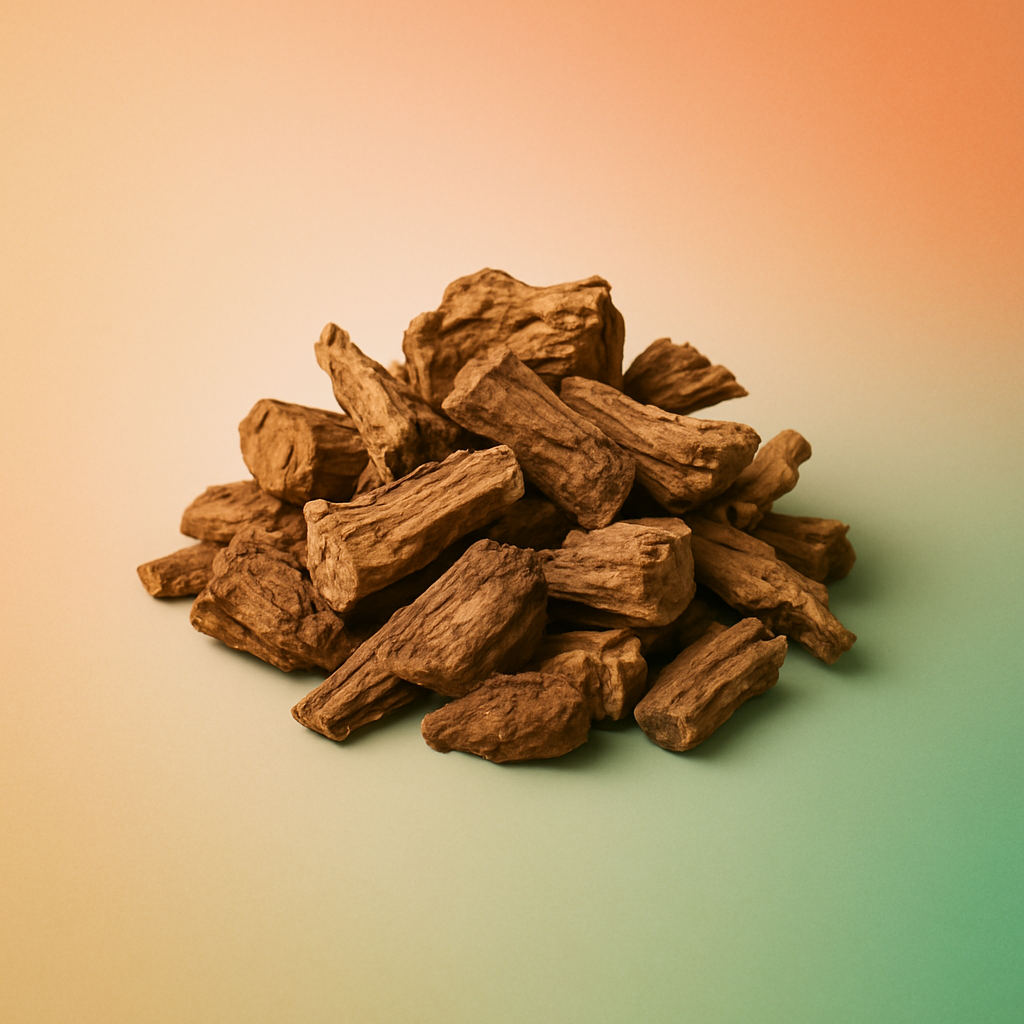
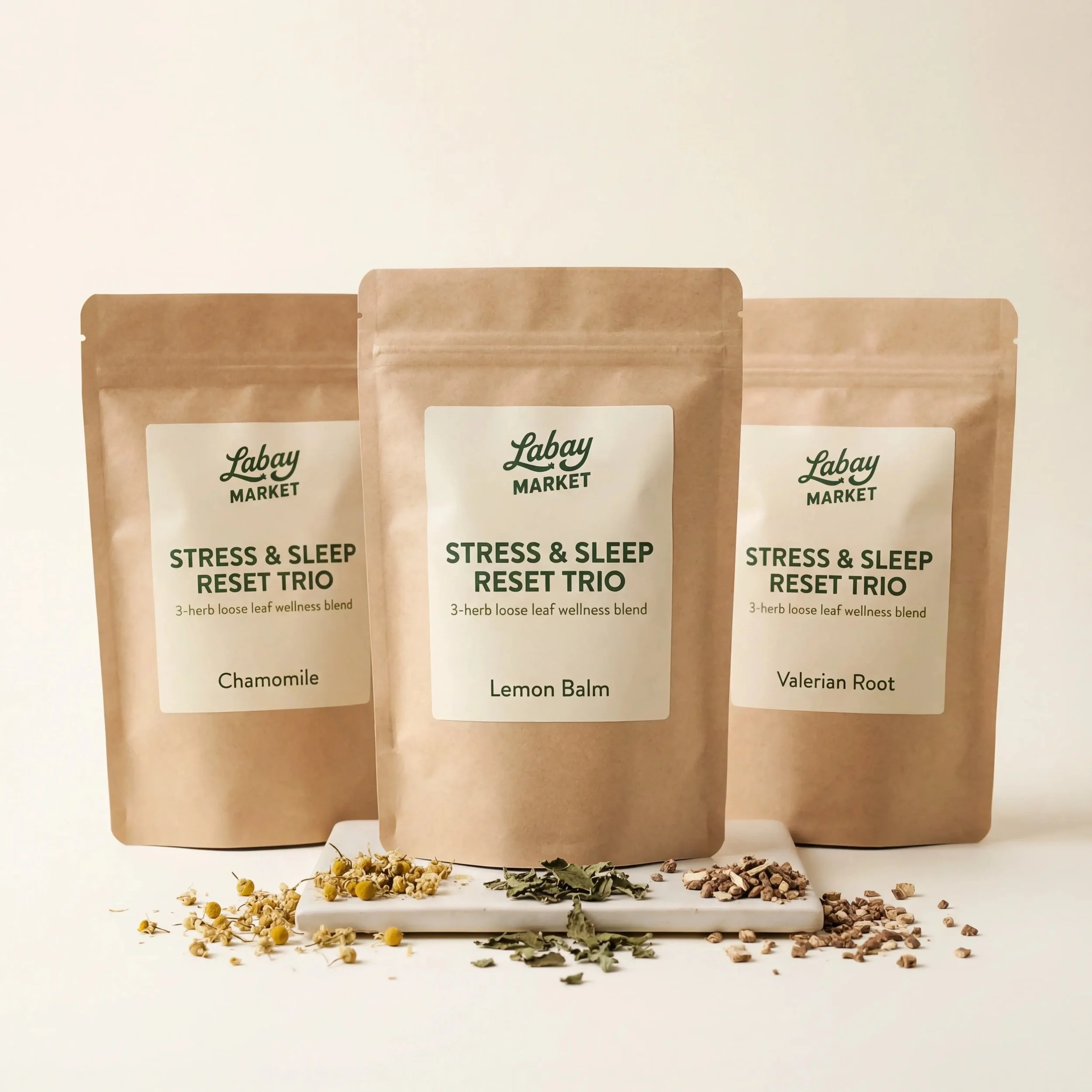
Valerian Root
Valeriana officinalis · Europe & AsiaThe accumulator. Valerian works differently from the other two herbs in this kit — it builds. The research is consistent on one thing: results come with regular use over at least two weeks, not from a single cup. Think of it as recalibrating your nervous system's baseline, not flipping a switch. That slow work is what makes the difference that lasts.
A 2020 PMC systematic review and meta-analysis of 60 studies (n=6,894) found positive outcomes for subjective sleep quality improvement, with 6 of 7 anxiolytic studies also reporting positive results. Valerian is a known GABA agonist and partial agonist of serotonin and adenosine receptors — the mechanism most associated with falling asleep without sedative hangover. It is an accepted over-the-counter medicine in Germany, Switzerland, Belgium, Italy, and France for stress, nervous tension, and disturbed sleep. Important caveat: some studies show inconsistent results; evidence is strongest for subjective sleep quality (how rested you feel) and anxiety reduction, not measured sleep latency.
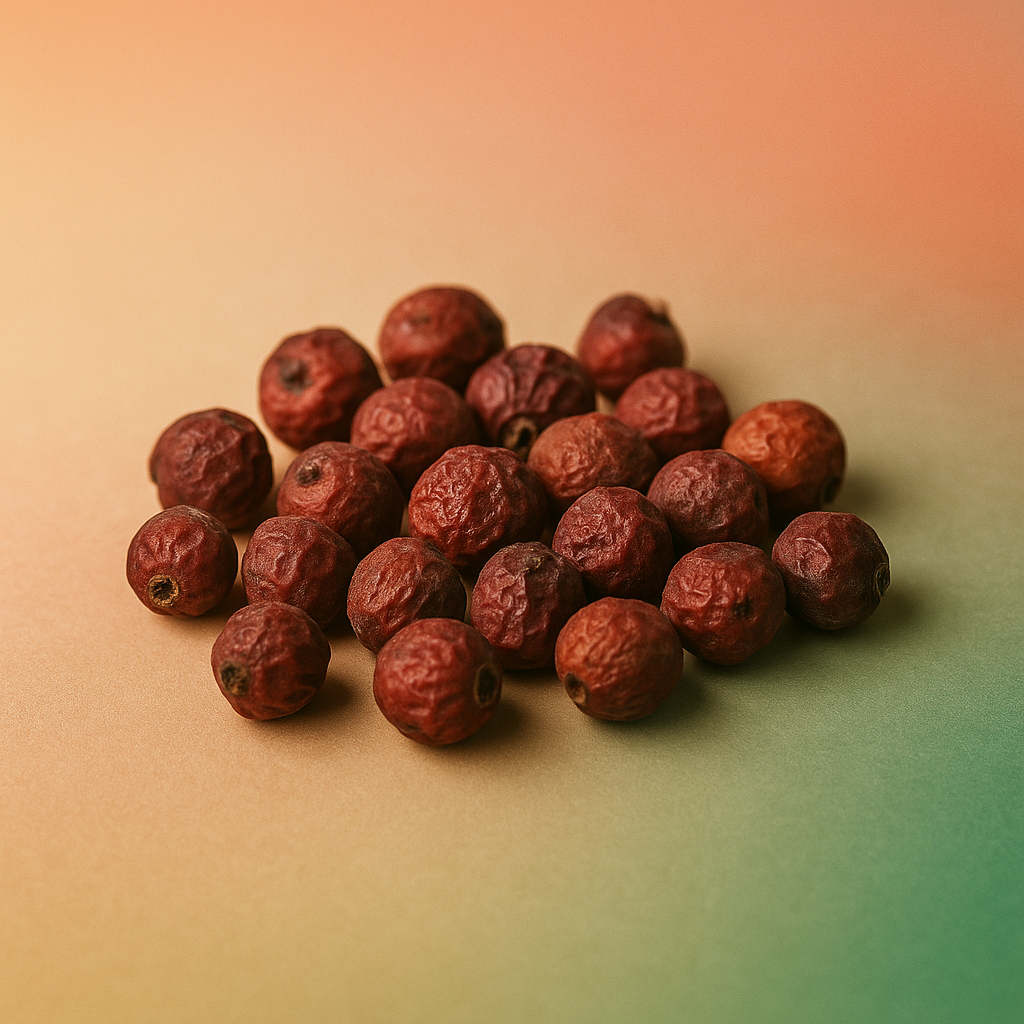
Chamomile
Matricaria chamomilla · Europe & AsiaThe receptor-level signal. Chamomile's active compound apigenin binds directly to the benzodiazepine receptors in your brain — the exact same sites targeted by prescription anti-anxiety drugs. But the safety window is dramatically wider. This is why chamomile has been used for sleep and calm for literally thousands of years, across cultures with no contact with each other. They independently discovered the same thing.
Apigenin, chamomile's key flavonoid, binds to benzodiazepine receptors and enhances GABA activity — confirmed across multiple in vitro studies. A 2024 PMC review found that dietary apigenin intake positively correlates with sleep quality in a large cohort of adults, and chamomile extract has shown reductions in anxiety and depression scores in RCTs. The separation index (anxiolytic vs sedative dose) for apigenin is 10, compared to 3 for diazepam — meaning it's more selective and has a much lower risk of oversedation. A 2019 systematic review and meta-analysis of 12 RCTs found chamomile significantly reduced anxiety scores and improved sleep quality.
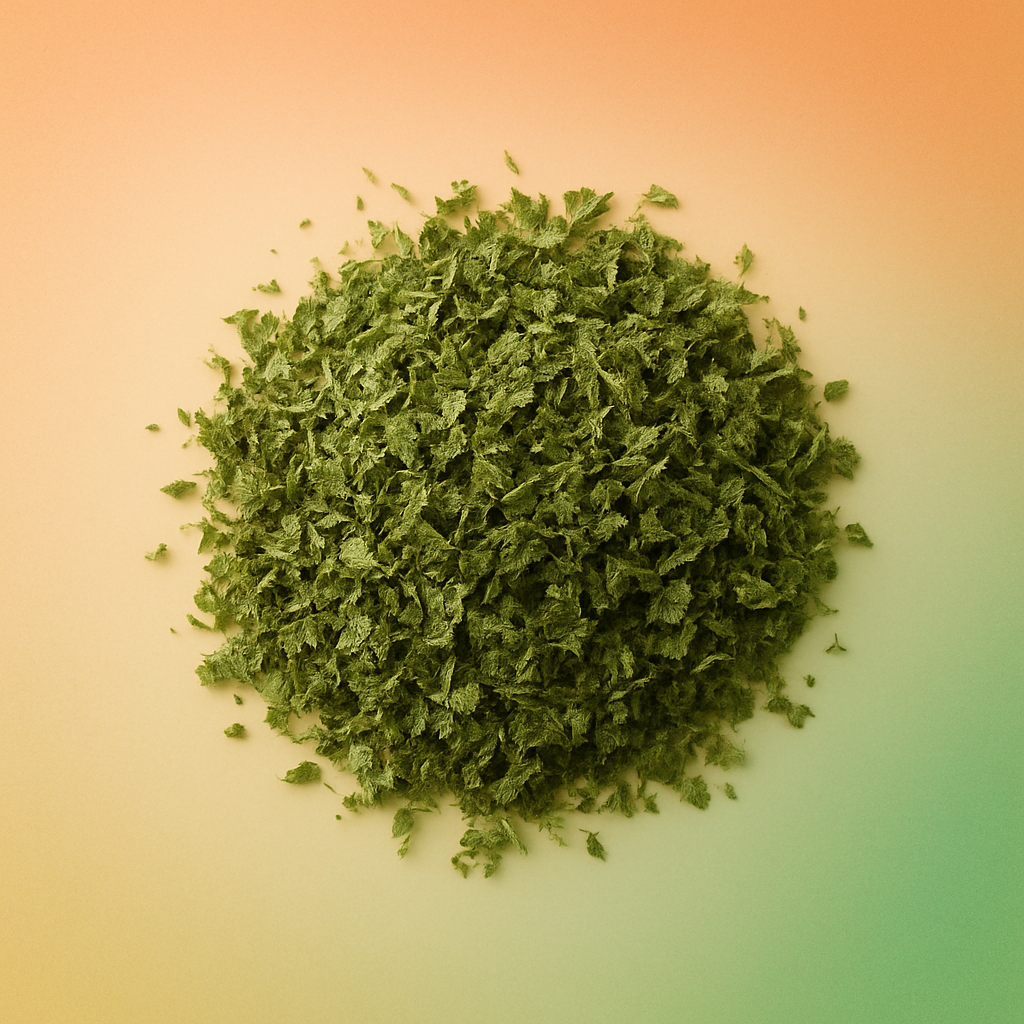
Lemon Balm
Melissa officinalis · MediterraneanThe cortisol counter. Lemon balm works upstream — before the receptor, before GABA itself. It inhibits the enzyme that breaks GABA down (GABA-T) and reduces cortisol levels directly. If valerian and chamomile are the lock and the key, lemon balm is making sure the door is unlocked in the first place. It's also the fastest-acting herb in this kit, which is why it's the one you'll probably feel first.
A 2023 double-blind, placebo-controlled RCT (Frontiers in Pharmacology, NCT05602688) found that lemon balm extract produced significant improvements in depression, anxiety, stress, mental wellbeing, and sleep quality scores — all with p<0.001 — within three weeks. A 2021 PubMed meta-analysis confirmed lemon balm significantly improved mean anxiety and depression scores vs. placebo (p=0.003 and p=0.0005). Its active compound rosmarinic acid inhibits GABA-T, the enzyme that degrades GABA — keeping more of it available in the brain. Research also shows it directly reduces serum corticosterone (the stress hormone), which is why it works even before you're trying to sleep.
One switch.
Three ways
to flip it.
GABA is the brain's primary inhibitory neurotransmitter. When it's active, your nervous system quiets down — the racing thoughts slow, the body tension releases, sleep becomes accessible. When cortisol suppresses GABA activity, none of that happens. You stay alert when you don't want to be.
Lemon balm works upstream — blocking the enzyme that destroys GABA while simultaneously reducing cortisol. More GABA gets to where it needs to go. Chamomile works at the receptor — apigenin binds the same benzodiazepine sites that anti-anxiety drugs target, but with a wider safety window. It tells your nervous system directly: you're safe, stand down. Valerian deepens and extends — acting as a GABA agonist itself while also engaging serotonin and adenosine pathways, the ones responsible for sleep quality that actually carries through to how you feel in the morning.
No single herb here does all three things. Together, they cover the full circuit.
- Racing thoughts at bedtime
- Wired but exhausted
- Light sleep, frequent waking
- Anxious without obvious cause
- Jaw clenching, shoulder tension
- Tired all day, alert all night
Consistent beats intense.
Steep all three herbs together in 10–12 oz of just-boiled water for 10–15 minutes, covered. The timing matters: 45 minutes gives lemon balm time to start reducing cortisol and chamomile's apigenin time to bind before you're trying to sleep. Drink warm, slowly.
Lemon balm and chamomile are more immediate — you may feel something within the first few nights. Valerian is the slow-burn component and needs consistent use to build effect. The 60-study meta-analysis found improvements specifically with repeated administration, not one-off use. Don't judge this kit after three nights.
You don't have to wait until bedtime. Lemon balm in particular is well-studied for daytime stress and anxiety reduction — the cortisol-lowering effect works any time. A mid-afternoon cup of just chamomile and lemon balm (without valerian) won't sedate you but will take the edge off a hard day.
Raw honey works here — it helps maintain stable blood glucose overnight, which reduces stress-hormone surges that cause 3am waking. Add after cooling slightly. Avoid caffeine for at least 4 hours before your sleep tea — it directly competes with adenosine receptors that valerian is trying to activate.
Valerian root is notoriously strong-smelling — earthy, funky, some say socks. That's isovaleric acid released from the root's active compounds, which is also a sign of potency. Adding a full chamomile packet and honey significantly softens it. The lemon balm adds a clean citrus note that helps even more. This is actually one of the better-tasting kits once you know how to balance it.
The research on valerian is mixed for objective sleep metrics like time-to-sleep. Where it's consistently positive is how you feel: sleep quality, anxiety reduction, waking refreshed. If you've been relying on metrics like a sleep tracker, your subjective experience matters more than the score. Trust how you feel.
Do not combine with alcohol or prescription sedatives/benzodiazepines — chamomile's apigenin binds the same receptors as benzos. Additive effects are possible. Consult a doctor if pregnant or nursing. Not for use in children under 12.
Sealed, dry, away from heat and light. 12+ months sealed. Once opened, 6 months. Valerian aroma intensifies with age — this is normal and doesn't indicate spoilage.
† Valerian meta-analysis: Shinjyo, Waddell & Green (2020), Journal of Evidence-Based Integrative Medicine, n=6,894 across 60 studies. Lemon balm 3-week RCT: Bano et al. (2023), Frontiers in Pharmacology, NCT05602688; all p-values <0.001. Apigenin separation index: Paladini et al., as cited in Chamomile: A herbal medicine of the past with bright future (PMC2995283). These statements have not been evaluated by the FDA. This product is not intended to diagnose, treat, cure, or prevent any disease. Do not combine with prescription sedatives, benzodiazepines, or alcohol. Consult a healthcare provider if pregnant, nursing, or taking medications affecting the central nervous system.